Is your AI coding agent repeatedly searching, reopening, and rereading the same repository files to rebuild context for every task?
If so, Harmony MCP may be worth evaluating as a focused Sourcegraph alternative for teams that need persistent, token-aware repository context for AI coding agents. Sourcegraph remains a broader platform for enterprise code search, navigation, Deep Search, and code intelligence.
The main difference is the problem each platform is designed to solve. Sourcegraph helps developers and AI agents search, navigate, investigate, and make changes across repositories. Harmony MCP is designed to help AI coding agents retrieve reusable repository context instead of repeatedly reconstructing their understanding of the codebase.
For teams comparing Sourcegraph and Harmony MCP, the decision depends on the workflow bottleneck. Sourcegraph may be better suited to organization-wide code discovery and enterprise code intelligence, while Harmony may be worth considering when the priority is persistent repository context, task-specific retrieval, relevance ranking, token budgeting, and adaptive context expansion.
This guide compares both approaches to help you determine whether Harmony MCP is an appropriate Sourcegraph alternative for AI coding workflows where reducing repetitive repository discovery and improving context selection are key requirements.
Graphify Alternative – Try Harmony MCP
See how Harmony MCP helps AI agents retrieve faster, more accurate context with fewer tokens.
Get Started NowWhat is Sourcegraph?
Sourcegraph is a code intelligence platform that helps developers search, navigate, understand, and change code across large repositories and multiple code hosts. It indexes repositories for fast search while also supporting searches across branches, commits, and code revisions, depending on the configuration and available features.
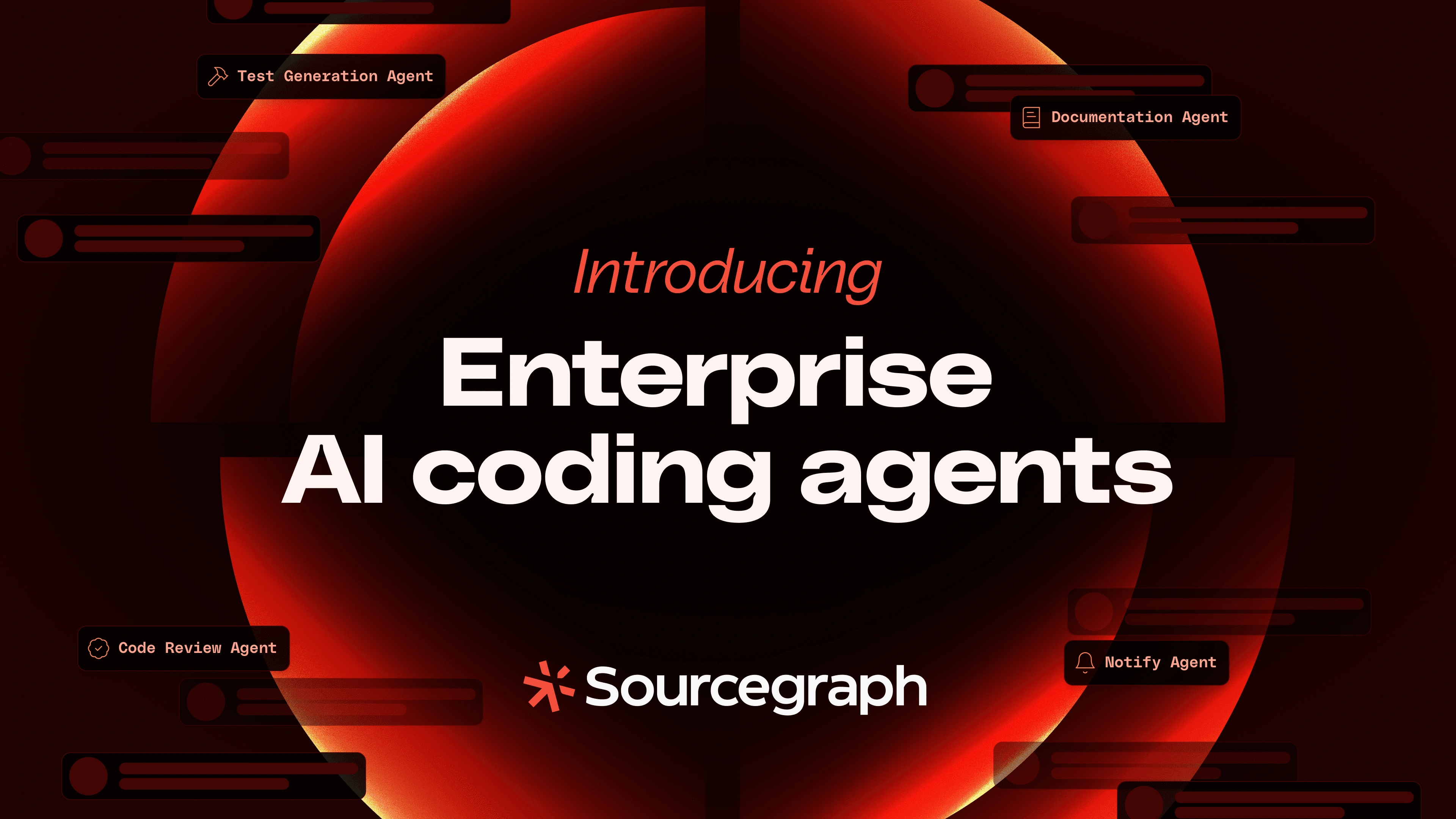
Its core capabilities include:
Code Search: Search across repositories using keywords, regular expressions, symbols, commits, diffs, and filters.
Code Navigation: Move through code using go to definition, find references, find implementations, and related navigation features.
Deep Search: Ask natural-language questions about a codebase and receive answers generated through agentic search and code-navigation workflows.
Code Insights: Track codebase trends such as migrations, dependency adoption, package usage, and remediation progress over time.
Batch Changes: Create, manage, and track coordinated code changes across multiple repositories.
Sourcegraph and Cody availability
Sourcegraph continues to support Cody Enterprise. Cody Free, Cody Pro, and Enterprise Starter access ended on July 23, 2025, according to Sourcegraph’s Cody FAQ. Teams should verify current Cody availability and licensing before selecting a plan (Source).
Sourcegraph MCP server
Sourcegraph also supports AI-assisted development through its MCP server. Compatible MCP clients can use Sourcegraph tools for code search, repository and file access, history, code navigation, Code Finder, and Deep Search, depending on the available endpoint and plan. Sourcegraph documents MCP support for Enterprise plans.
Sourcegraph administrators can enable or disable MCP, restrict individual tools, and manage access through role-based permissions. MCP requests also respect users’ existing repository permissions, so users can read-only repositories they are already authorized to access.
Sourcegraph MCP tools also apply result limits and support narrower queries or pagination to help control the amount of information returned to an AI agent. These controls can reduce excessive output, although the reviewed documentation does not describe a dedicated token-budgeting and context-packing system equivalent to Harmony’s advertised approach.
One of Sourcegraph’s biggest strengths is cross-repository code discovery. A developer can locate an implementation, trace where a function or dependency is used, examine commits and diffs, or navigate definitions and references without manually searching repository by repository (Source).
This makes Sourcegraph a strong fit for teams that need:
Organization-wide code search.
Cross-repository navigation.
Large-scale code investigation.
Dependency and migration tracking.
Multi-repository code changes.
Enterprise code intelligence for developers and AI agents.
Sourcegraph is therefore well suited to helping developers and AI systems find and investigate code at scale.
However, AI coding workflows can introduce another problem: agents may repeatedly search, reopen, and reconstruct the same repository context across tasks and sessions. Teams that want persistent codebase context, token-aware retrieval, and task-specific context selection may therefore evaluate a focused Sourcegraph alternative such as Harmony MCP.
Looking for a Best Sourcegraph Alternative in 2026?
Harmony MCP may be a focused Sourcegraph alternative for teams whose main requirement is persistent, task-specific context for AI coding agents. Sourcegraph is designed for broad code search, navigation, investigation, and enterprise code intelligence, while Harmony is marketed as a repository-memory and context-retrieval layer that helps AI agents reuse relevant codebase knowledge.
Teams may consider a Sourcegraph alternative for AI coding when they need to:
Reduce repeated repository searches and file reads.
Preserve reusable repository context across coding tasks and sessions.
Retrieve only the repository information relevant to the current prompt.
Control how much repository information enters the model context window.
Prioritize important symbols, dependencies, imports, and call relationships.
Expand context only when additional related code is required.
Provide shared repository context to multiple MCP-compatible coding tools.
Harmony supports this workflow through persistent repository indexing, contextual retrieval, relevance ranking, token-aware context assembly, and adaptive context expansion. These are vendor-described capabilities and should be validated against representative repositories and agent workflows before making a purchasing decision.
Harmony MCP Capabilities - Best Sourcegraph Alternative
Harmony MCP as a high-performance agentic-memory layer for AI coding workflows. Its product page advertises the following capabilities:
Persistent repository memory intended to remain available across coding tasks.
A contextual index that combines semantic retrieval with code relationships such as symbols, imports, call graphs, and dependencies.
Multiple ranking stages intended to prioritize relevant repository information.
Token budgeting for controlling the amount of context included in a request.
Adaptive context expansion that can retrieve related callers, callees, dependencies, or symbols when additional context is needed.
MCP-based access for compatible AI coding tools.
Structured output intended for consumption by large language models.
These capabilities describe Harmony’s advertised product design. The available product material does not independently establish performance across all repository sizes, models, agents, or deployment environments.
Harmony is not intended to replace every Sourcegraph capability. Sourcegraph remains better suited to teams that need:
Enterprise-wide code search.
Cross-repository navigation.
Large-scale code investigation.
Code Insights.
Batch Changes.
Broader enterprise code intelligence.
Centralized access controls and administrative management.
Get insights in your inbox!!
Weekly tips on building smarter apps. Join 8,200+ founders and builders.
No spam. Unsubscribe anytime. We respect your privacy.
The key difference is simple:
Sourcegraph helps teams search, investigate, navigate, and change code at scale. Harmony MCP is designed to help AI coding agents retain, rank, and retrieve relevant repository context for individual coding tasks.
Harmony MCP vs Sourcegraph: Feature-by-Feature Comparison
Sourcegraph and Harmony MCP address related but different requirements. Sourcegraph provides a broad set of tools for developers and AI systems to search, navigate, investigate, and manage code across repositories. Harmony is more specialized around how repository context is retained, ranked, packaged, and reused by AI coding agents.
Feature | Sourcegraph | Harmony MCP |
Primary purpose | Code search, navigation, investigation, and enterprise code intelligence | Persistent repository context for AI coding agents |
Code search | Keyword, regular-expression, symbol, commit, diff, and cross-repository search | Semantic retrieval within its contextual memory index. |
Natural-language investigation | Deep Search uses an agentic process to investigate codebase questions and return answers | Builds task-specific context around an agent’s active prompt. |
Code navigation | Go to definition, find references, find implementations, and cross-repository navigation | Uses symbols, call graphs, imports, callers, callees, and dependencies when building context. |
Persistent repository memory | Sourcegraph provides persistent repository indexing, search, navigation, history, and Deep Search capabilities. Its reviewed documentation does not describe a dedicated cross-session agent-memory layer that packages and reuses repository context in the same way Harmony advertises its memory system. | Harmony advertises persistent repository memory and reusable context retrieval across coding sessions |
Relevance ranking | Search and navigation tools return results based on query relevance and code relationships | Harmony advertises multiple ranking stages for prioritizing repository information |
Token and context control | MCP applies result limits and supports narrower queries or pagination to control returned output | Harmony advertises dedicated token budgeting and context packaging |
Context expansion | Deep Search can iteratively use search and navigation tools to investigate a question | Harmony advertises adaptive expansion across related symbols, callers, callees, imports, and dependencies |
MCP support | Enterprise MCP provides access to selected Sourcegraph search, repository, history, navigation, Code Finder, and Deep Search tools | MCP-based repository-context access for compatible coding agents. |
Large-scale code changes | Batch Changes supports coordinated changes across multiple repositories | Not positioned as a Batch Changes replacement |
Codebase trend analysis | Code Insights tracks searchable trends such as migrations, package usage, and remediation progress | Not presented as a core Harmony use case |
LLM-facing output | MCP tool results and Deep Search responses | Structured Markdown and context bundles intended for LLM consumption. |
Best suited for | Organization-wide code discovery, investigation, navigation, repository history, and enterprise code intelligence | AI coding workflows that need persistent repository context, token-aware retrieval, and reusable context bundles |
Harmony may complement Sourcegraph in some environments rather than replace it. For example, a team might use Sourcegraph for organization-wide discovery and governance while evaluating Harmony for context-heavy AI coding workflows.
Where Sourcegraph May Fit Better
Sourcegraph may be the better fit when a team needs broad, organization-wide code intelligence rather than only a repository-context layer for AI coding agents.
Consider Sourcegraph when you need to:
Give developers one place to search and navigate across many repositories.
Trace implementations, references, and dependencies across a large software estate.
Understand the impact of migrations or dependency changes across multiple projects.
Coordinate code updates that affect many repositories at once.
Support engineering teams working across multiple code hosts.
Maintain centralized visibility, permissions, and governance as the codebase grows.
Help developers investigate unfamiliar systems without manually checking repositories one by one.
Provide centralized code intelligence and administrative controls for developers and AI tools.
Sourcegraph is particularly relevant when the workflow includes cross-repository investigation, codebase trend analysis, or coordinated changes. Code Insights and Batch Changes address use cases that are outside Harmony’s stated primary focus.
Where Harmony May Fit Better
Harmony may be worth evaluating when the primary challenge is giving AI coding agents focused, reusable repository context rather than providing a complete enterprise code-intelligence platform.
Consider evaluating Harmony when:
An agent repeatedly searches and rereads the same repository files.
Developers frequently begin new AI coding sessions involving the same codebase.
Large repositories are consuming unnecessary model context.
Multiple MCP-compatible coding tools need access to shared repository context.
The team wants an agent-memory layer alongside its existing development tools.
The workflow benefits from retrieving related symbols, callers, callees, and dependencies on demand.
The team wants to test token-aware context assembly for AI coding tasks.
Harmony’s product page presents these capabilities as part of its agentic-memory design. Teams should confirm repository freshness, access controls, deployment architecture, security documentation, and client compatibility before adopting it for production workloads.
Harmony’s advertised capabilities should not automatically be interpreted as proof of lower cost, higher accuracy, or faster performance. Teams should benchmark it using representative repositories, prompts, models, and coding-agent tools.
Sourcegraph or Harmony MCP?
The right choice depends on whether your main requirement is broad code intelligence or focused repository context for AI agents.
Evaluate Sourcegraph if you need:
Organization-wide code search across many repositories.
Cross-repository navigation and reference tracing.
Deep Search for natural-language code investigation.
Code Insights for tracking migrations, package adoption, and other codebase trends.
Batch Changes for coordinating updates across multiple repositories.
Centralized code intelligence, permissions, and administrative controls.
A platform for large, distributed engineering environments.
Feature availability varies by Sourcegraph plan, and MCP is documented as supported on Enterprise plans.
Evaluate Harmony MCP if you need:
A coding agent that repeatedly searches the same parts of a repository.
Reusable repository context across multiple coding sessions.
More selective context retrieval for large repositories.
Shared repository context across multiple compatible MCP clients.
A dedicated agent-memory or context-retrieval layer rather than a full enterprise code-intelligence platform.
A way to test token-aware context assembly and adaptive retrieval.
Jenkins MCP Server: Connect CI/CD Pipelines to AI Agents
Jenkins MCP Server connects Jenkins CI/CD pipelines with AI agents through the Model Context Protocol, giving MCP clients structured access to Jenkins jobs, builds, build logs, artifacts, test results, queue items, and pipeline status. This guide explains how Jenkins MCP Server works with the Jenkins API, how AI coding agents and DevOps teams can use it for build failure investigation, log search, test-result review, artifact retrieval, and pipeline troubleshooting, and what security controls are needed, including API tokens, least-privilege permissions, read-only access, monitoring, and human approval for production workflows.
The decision comes down to the workflow bottleneck. Use Sourcegraph when the main challenge is searching, navigating, and understanding code across a large engineering environment. Evaluate Harmony when the main challenge is helping AI coding agents efficiently retrieve and reuse relevant repository context.
A Focused Sourcegraph Alternative for AI Coding
Harmony MCP is a potential Sourcegraph alternative for teams that specifically need persistent, token-aware repository context for AI coding agents. Sourcegraph remains the broader option for enterprise code search, navigation, Deep Search, codebase analysis, and large-scale engineering workflows.
Choose Sourcegraph when you need:
Enterprise code search and navigation.
Cross-repository investigation.
Codebase trend analysis.
Coordinated changes across multiple repositories.
Centralized access controls and code intelligence.
Enterprise repository governance and administration.
Consider Harmony MCP when you need:
Persistent repository context.
Token-aware context retrieval.
Multiple ranking stages.
Adaptive context expansion.
Task-specific context bundles for AI coding agents.
Reusable context across compatible MCP clients.
The best option depends on the problem you are trying to solve. Sourcegraph is designed to help teams discover and analyze code across large engineering environments. Harmony is designed to help AI coding agents retain, rank, and reuse relevant repository context.
If your AI coding agents keep rediscovering the same repository information, Harmony may be worth testing as a focused context-memory option. Before adopting it, compare retrieval quality, context freshness, token usage, latency, security controls, deployment requirements, and client compatibility against your actual workloads.
Sourcegraph Alternative – Try Harmony MCP
See how Harmony MCP helps AI agents retrieve faster, more accurate context with fewer tokens.
Get Started NowFrequently Asked Questions
What is the best Sourcegraph alternative in 2026?
Harmony MCP is a strong choice for teams whose main challenge is giving AI coding agents reusable repository context rather than enterprise-wide code search.
How is Harmony MCP different from Sourcegraph?
Sourcegraph focuses on searching, navigating, and analyzing code across repositories. Harmony MCP focuses on persistent repository memory, task-specific context retrieval, token budgeting, and reusable context for AI coding agents.
Is Harmony MCP faster than Sourcegraph?
The tools are optimized for different workflows, so a direct speed comparison is not always meaningful. Harmony is designed for fast memory retrieval and reduced repeated context discovery, while Sourcegraph is optimized for large-scale code search and investigation.
Which is better for production AI workflows?
It depends on the workflow. Sourcegraph is stronger for enterprise-wide code intelligence, while Harmony MCP is better suited to production AI coding workflows that need persistent repository memory, controlled context size, and repeated context reuse.
Is Sourcegraph free?
Sourcegraph's current product availability and features vary by plan. Some advanced capabilities, including Code Insights, Batch Changes, and MCP access, are tied to Enterprise offerings, so teams should check current Sourcegraph pricing and plan details before choosing.
Does Sourcegraph reduce token usage?
Sourcegraph MCP uses result limits to help control how much information is returned to an AI agent, but it does not document dedicated token budgeting as a core Sourcegraph capability. Harmony MCP explicitly uses token budgeting when packaging repository context.
Does Sourcegraph work locally?
Sourcegraph can be deployed in enterprise environments and can connect to supported code hosts and repositories. However, its deployment model differs from a lightweight local MCP memory layer, so the right option depends on your infrastructure and code-access requirements.
Written by
Paul Dhaliwal
Founder & Chief Executive Officer
Paul Dhaliwal is a tech innovator and Founder of CodeConductor, an open-source no/low-code platform. With 10+ years of experience in AI and scalable development, Paul focuses on crafting intelligent solutions that drive real-world value. A firm believer in the mantra "Eat, Sleep, Code, Repeat," he balances his passion for software with a love for travel and family.